
Why a Single Inspection Can't Forecast Your Capital Budget, But a Series Can
- Harlon Mark
- 1 day ago
- 2 min read

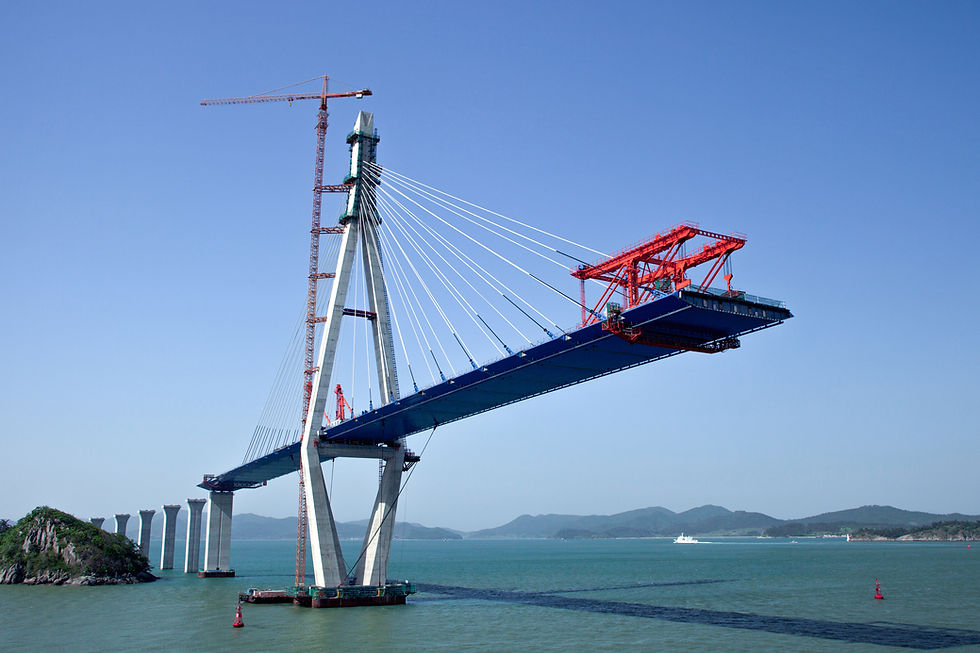
A single bridge or infrastructure inspection tells you the current condition. It can't tell you how fast that condition is changing, and forecasting capital needs depends entirely on the second question, not the first.
Why one data point isn't enough for budget forecasting
Capital planning requires knowing not just current condition but rate of change, is a structure deteriorating slowly, quickly, or has it been stable for years. A single inspection provides a snapshot with no way to answer that question, which means capital budget decisions based on one-off inspections are essentially educated guesses about future need, not projections grounded in an actual trend.
What becomes possible with a repeated, comparable dataset
Comparing scans of the same structure over successive years lets an agency mathematically calculate degradation rates and forecast future capital needs, rather than relying on a single point-in-time assessment to inform a multi-year budget decision. This is only possible if each inspection uses a consistent enough methodology to be genuinely comparable, inconsistent inspection approaches from year to year make it difficult to distinguish a real change in condition from a difference in how the inspection was conducted.
Why aerial inspection is particularly well suited to this
Because a drone flight can repeat the same flight path and capture methodology consistently, recurring aerial inspection produces a directly comparable dataset over time in a way that's harder to achieve with ground-based inspections, which can vary in coverage and inspector judgment from one visit to the next. This consistency is what actually makes the resulting trend line trustworthy enough to base a budget forecast on.
Why this matters for how inspection frequency gets justified
An inspection program justified purely on "we need current condition data" undersells its own value once a few years of consistent data exist, at that point, the program is also producing degradation-rate data that directly informs capital planning, which is a meaningfully more valuable output than a single condition snapshot repeated periodically without connecting the dots between visits.
The practical takeaway
If your current capital planning relies on periodic, inconsistent inspection methods, the missing piece isn't more frequent inspection alone,
it's inspection consistent enough across visits to actually build a comparable trend line, which is what turns a series of snapshots into a genuine forecasting tool.
This is a focused look at one part of a much larger picture, read the complete guide to aerial infrastructure management for the full picture on the MnDOT case study, traffic control savings, and RFP-ready pricing structures. See the Annual Municipal Infrastructure Intelligence Program™ for current pricing.


Comments